





In 2026, global beef production may decrease by almost 2%, which, together with a reduction in herd sizes in producer regions and trade restrictions, could support high prices, creating favorable conditions for Ukrainian exporters.
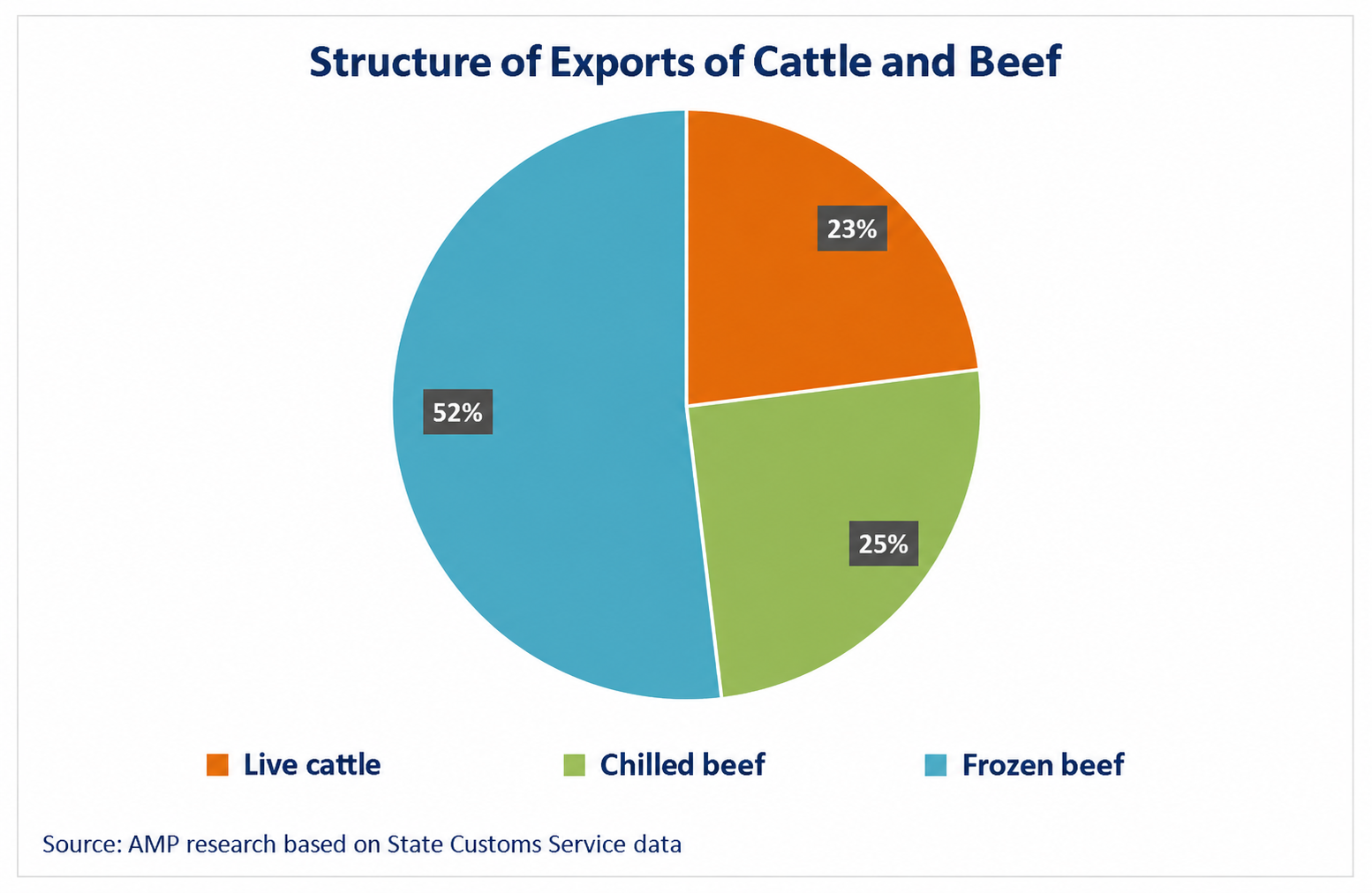
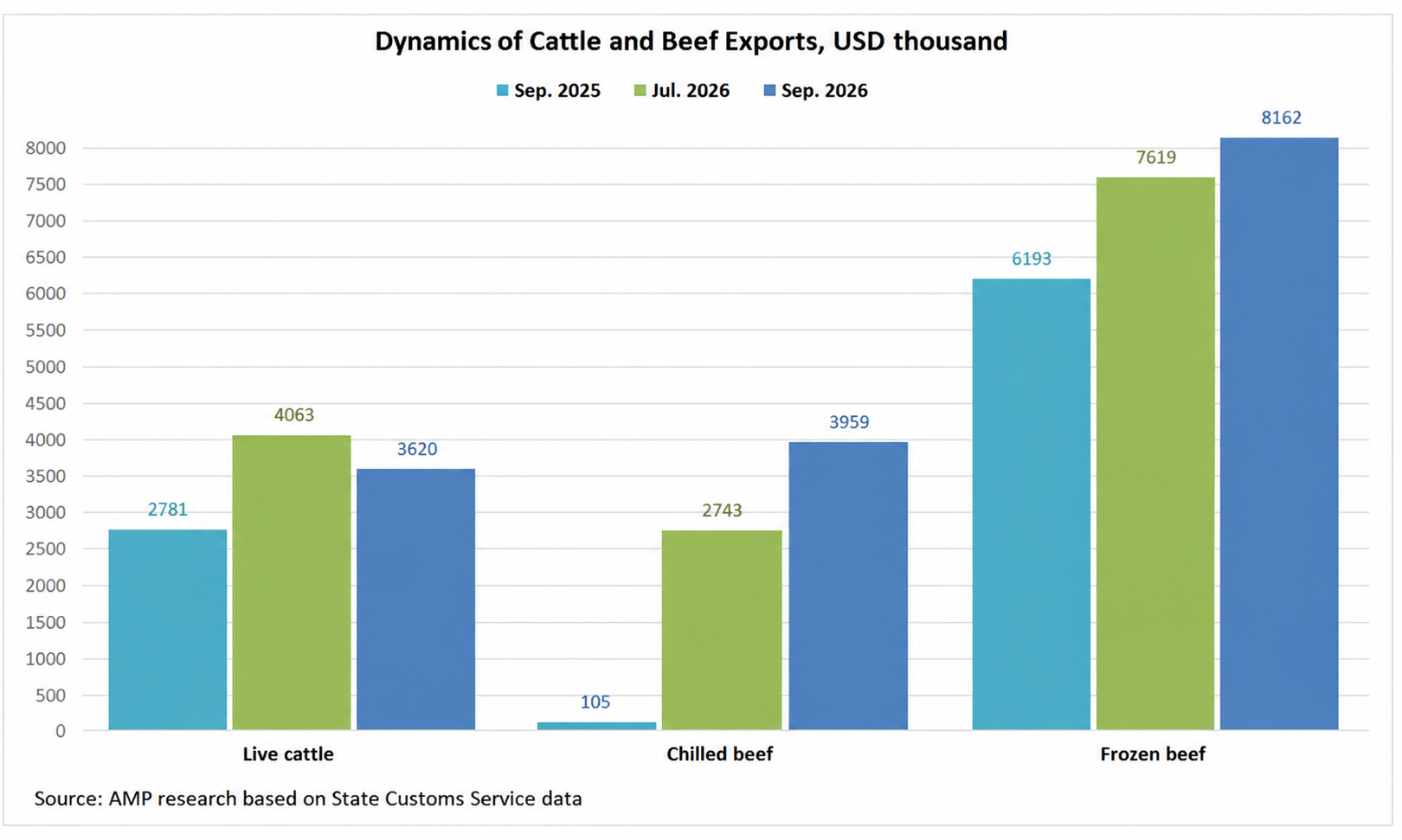
According to preliminary data from the State Customs Service, in August 2026, Ukraine exported about 1.32 thousand tons of live cattle, which is 1% more relative to July 2026 and 31% more relative to August 2025. However, monetary revenue for exported animals amounted to 3.62 million USD, which is 11% less relative to July 2026, but 30% more relative to August 2025. In January–August 2026, Ukraine exported 13.47 thousand tons (+5.9%) of cattle worth 32.31 million USD (+14%).
In August 2026, Ukrainian exporters supplied 474 tons of fresh or chilled beef to foreign markets, which is 38% more relative to July and almost 25 times more relative to August 2025. Export revenue for the supplied commodity amounted to 3.95 million USD, which is 44% more relative to July, but 37 times more relative to August 2025. In January–August 2026, Ukraine exported 3.04 thousand tons of fresh beef worth 24.36 million USD. Ukraine increased physical volumes of fresh beef exports 25 times, and monetary revenue increased almost 34 times compared to last year's period.
Physical volumes of frozen beef exports from Ukraine in August 2026 stood at 1.82 thousand tons, which is 8% more relative to July 2026 and 34.2% more relative to August 2025. Monetary revenue for the supplied commodity amounted to almost 8.16 million USD, which is 7% more relative to July 2026 and 32% more relative to August 2025. In January–August 2026, Ukraine exported 12.75 thousand tons (+1%) of frozen beef worth 57.56 million USD (+12%).
The global beef market is entering a period of supply contraction and restructuring of trade flows. According to Rabobank estimates, global beef production in 2026 may decrease by almost 2%, and its supply may contract by 2–3%, as Agriland reports. Decreases are expected in the EU, USA, Brazil, and China, while high livestock prices and logistical hurdles force exporters to look for new markets. In June, Australia exhausted China's annual beef import quota of 205 thousand tons, after which Australian shipments to China dropped sharply, and part of the products had to be redirected to the markets of Japan, South Korea, the USA, and Middle Eastern countries.
In August 2026, the average live cattle price in China reached 28.21 yuan per kg and increased by 3.64% relative to July. The growth is explained primarily by a shortage of slaughter-ready cattle. Heatwaves and previous large slaughter volumes led to a reduction in the supply of finished cattle. Chinese slaughterhouses were raising procurement prices. At the same time, the breeding cow sector in China remained weak, as farmers' interest in herd replenishment was low due to financial constraints. Cattle price increases in China occurred mainly due to limited supply rather than against a background of real consumer demand, as consumer interest remains sluggish amid high prices. Red meat demand was expected to strengthen somewhat ahead of the Chinese national holidays in autumn, but an increase in cattle supply after the holidays could put pressure on prices. An additional factor driving price growth in China is the exhaustion of the Brazilian quota. Beef imports from Brazil to China within the quota are taxed at 12%, and after its exhaustion, the rate rises to 67%.
In recent years, Brazil has expanded beef exports thanks to access to the Chinese market. In 2025, China absorbed about 48% of total Brazilian beef exports. In July, Brazilian exports to China had already decreased by 17% year-on-year, and after quota exhaustion, about 10 thousand tons of Brazilian beef per month will have to be directed to alternative markets. Also likely is the termination of Brazil's access to the EU market due to antimicrobial drug control requirements. The EU is one of the most attractive destinations for Brazilian beef in terms of value, despite accounting for only 3–4% of Brazilian exports.
In 2025, Brazil exported 117 thousand tons of beef to the EU. According to Rabobank estimates, if imports of Brazilian beef cease, Europe will look for other suppliers, particularly in Argentina, Uruguay, and Australia. The loss of the European market could lead to a product surplus in Brazil, which should put pressure on domestic prices. Therefore, Brazil may more actively reorient exports to the UK, Mexico, the Middle East, Japan, and other Asian markets. On Brazil's domestic market, prices for calves and young stock are rising due to supply contraction and the retention of more animals for reproduction. For Brazil, opening access to the markets of Japan and South Korea could become a timely exit route.
In the US, the reduction of the cattle herd also creates preconditions for high beef prices. At the beginning of 2026, the American cattle herd stood at about 86.2 million head, which is almost 8 million less than in 2019 due to multi-year drought. Prices for Choice category beef have risen by nearly 23% since August 2024, and herd recovery could take years. At the same time, in the short term, companies may face lower prices for calves and finished cattle. In late August, the Trump administration allowed the import of 300 thousand tons of lean beef trimmings at a lower quota tariff rate and resumed the entry of live cattle from Mexico after a 14-month ban. However, economists believe these measures will not contribute to a significant drop in retail prices. On the contrary, increased beef imports could weaken cattle prices domestically, which is unfavorable for American farmers selling animals for herd rebuilding. The Arkansas Cattlemen’s Association warned that increased beef imports will put pressure on farm profitability and emphasized the combination of cattle deficits with high fuel and fertilizer costs.
In other regions, shortages and trade restrictions are also changing the market balance. In Colombia, beef producers are calling on the government to speed up sanitary approvals for access to the US market. In Ireland, by contrast, livestock prices are falling under pressure from weaker demand and temporary herd recovery. Premium beef production volumes in Ireland are expected to decrease by 4% in 2026. Irish beef export volumes to Great Britain in the first half of the year have already dropped by 10.5%. Summer drought and heat degraded pasture conditions and led to reduced feed stocks. Premium cattle slaughter volumes in Ireland by the end of August stood at 802 thousand head, which is 4% less than last year. European consumers are increasingly switching to cheaper types of meat due to high prices.
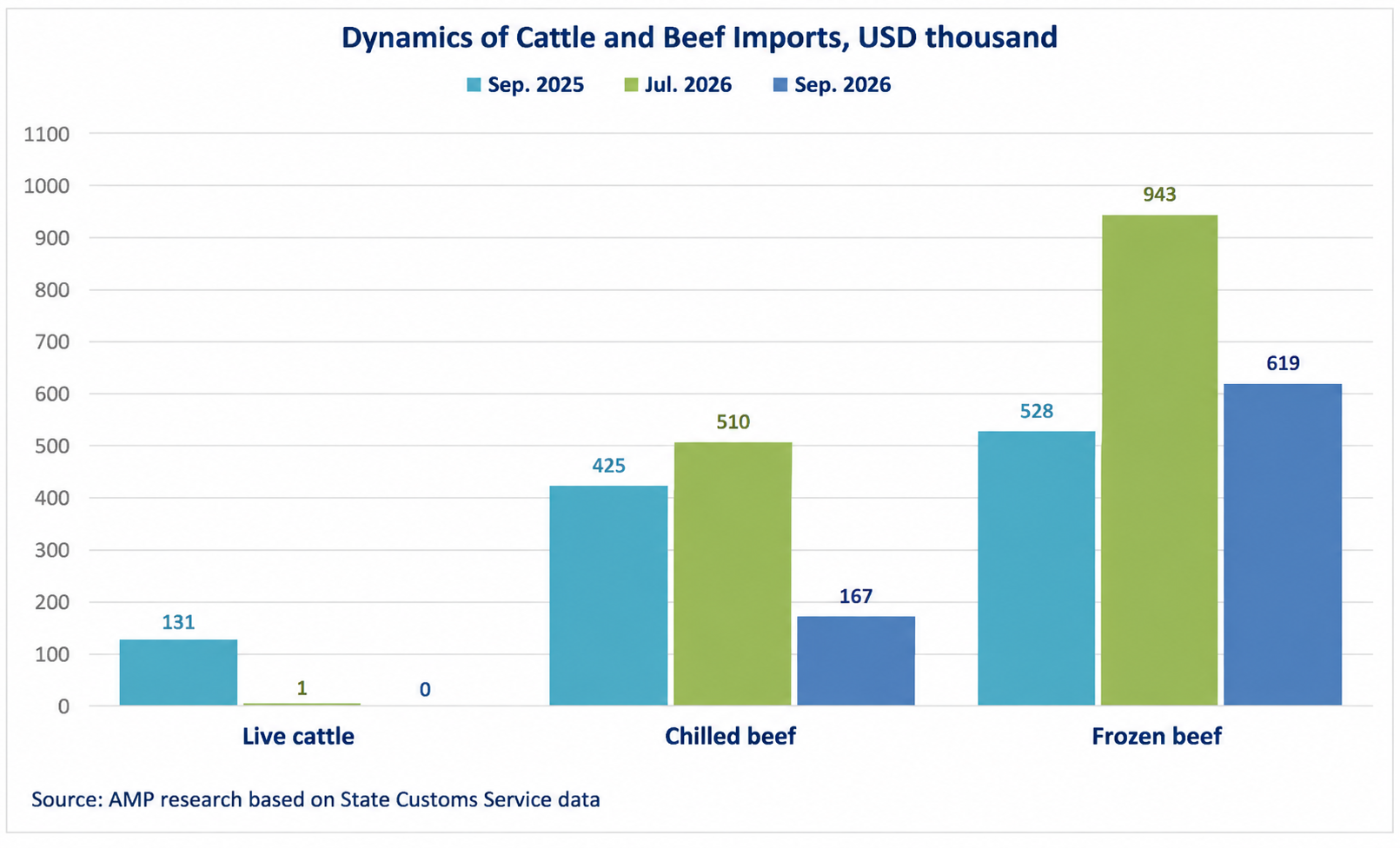
In August 2026, Ukraine imported no cattle. Chilled beef import volumes stood at 9 tons, which is 40% less relative to July and 40% less relative to August 2025. Frozen beef imports stood at 84 tons, which is 32% less relative to July, but 38% more relative to August 2025. Over the 8 months of 2026, Ukraine reduced import volumes of cattle to 93 tons (-82%), frozen beef to 754 tons (-25%), but increased chilled beef import volumes to 99 tons (+4%) relative to last year's period.
The foreign trade balance in August 2026 was positive and stood at 14.95 million USD.
Press service of the Association of Milk Producers
Follow us on LinkedIn
Related News