




Demand for skimmed milk powder intensified in export markets due to buyers' concerns regarding the potential negative consequences of the El Niño natural phenomenon for milk producers in the Southern Hemisphere. Therefore, buyers are making stocks of the commodity in advance. Manufacturers of confectionery products and sauces are also actively contracting for deliveries of buttermilk powder, which is a cheaper alternative to skimmed milk powder.
On Tuesday, September 1, the 411th GDT trading event took place, following the results of which the price index stood at 1177, which is 11 points (+0.9%) more relative to the previous trading event. The average price for dairy products stood at 3910 USD per ton, which is 37 USD more relative to the results of the previous auction. During the trading event, 43976 tons of exchange-traded commodities were sold, which is 2922 tons more relative to the results of the last auction. The minimum offer was recorded at the level of 39005 tons, and the maximum – at the level of 46146 tons. 157 dairy market operators participated in the trading event, which is 19 companies less relative to August 18.
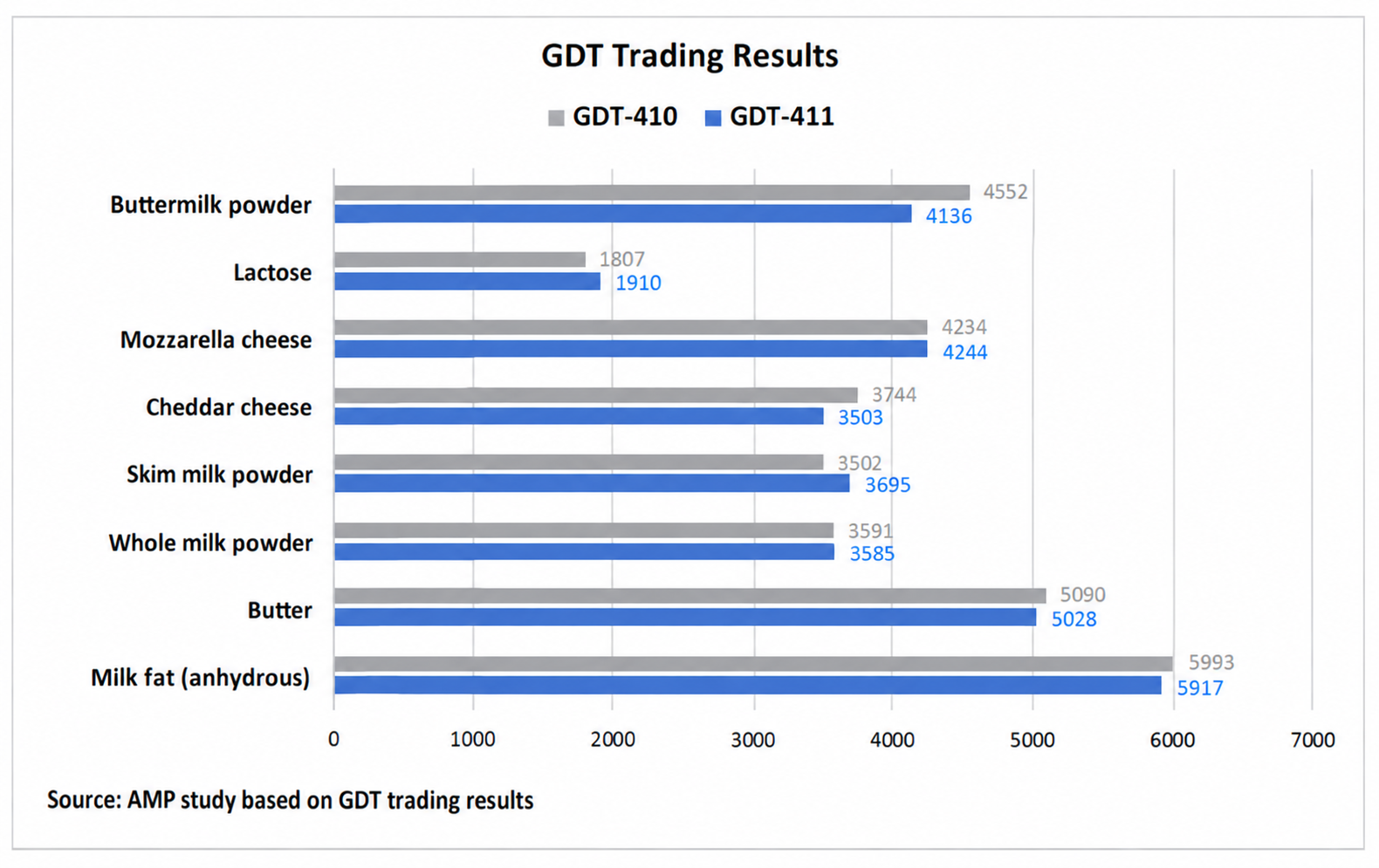
According to the results of the trading event, the price for anhydrous milk fat stood at 5917 USD per ton, which is 1.3% less relative to the previous trading event. The growth of milk fat supply in Oceania and the US after the heat receded puts pressure on prices. The exception was Europe, where milk fat prices increased against the background of a reduction in raw milk production volumes. According to the GDT forecast, in October the price for anhydrous milk fat may decrease by 4.9%, and in November it may decrease by 2.3%.
The price for butter at this trading event stood at 5028 USD per ton, which is 0.8% less relative to the previous trading event. Butter is depreciating in Oceania against the background of increasing milk yields. According to New Zealand Exchange (NZX) analyst Rosalind Crickett, in New Zealand the trend toward growth in raw milk production compared to last year continues due to favorable weather conditions, good condition of pastures, and a sufficient supply of feed. According to USDA data, the leading New Zealand cooperative plans to increase butter production volumes by 2 thousand tons over the next 12 months.
As Czapp reports, butter prices in the US are pressed by large warehouse stocks and an increase of fat in the composition of raw milk from local producers, and the supply of the commodity is ahead of demand. Demand for American butter in export markets has slowed down. According to USDA data, butter production in the US is active, and the supply of raw milk improved thanks to cooler weather. Certain volumes of cream are even exported to Mexico. Demand for butter in the American market is stable after a certain activation of demand during preparation for Labor Day (September 7) and therefore milk processing enterprises are accumulating warehouse stocks and preparing for the baking season in autumn and winter.
According to USDA data, butter is appreciating only in the EU against the background of a decrease in its production volumes as a result of a reduction in milk yield volumes during a period of severe heat. Milk processing enterprises are experiencing a certain shortage of cream. Demand for butter in the EU is point-based and mostly stable, but warehouse stocks of the commodity are gradually decreasing. As AHDB reports, it is economically unprofitable for European milk processing enterprises to process raw milk into butter outside existing contractual obligations at current procurement prices and growing production costs.
Further reduction in milk yields, butter production volumes, and other dairy products, as well as price growth, may be affected by an outbreak of orthobunyavirus in Germany, France, and Switzerland, which is transmitted through biting midges. According to Mundus Agri data, this disease is related to the Shamonda and Schmallenberg viruses and causes fever, diarrhea, and a sharp reduction in milk production. Auction organizers expect that in October the price for butter may increase by 1.5%, and in November it may decrease by 1.1%.
The price for whole milk powder stood at 3585 USD per ton and decreased by only 0.1% compared to the results of the previous trading event. The price for the commodity almost did not change, which indicates the stability of demand for the commodity in the markets, although without excitement. As New Zealand Exchange analyst Rosalind Crickett reports, despite the fact that since the beginning of the year milk production in most regions of the world was significant, the situation with its supply may be changed by excessively high temperatures in the Northern Hemisphere and the consequences of the El Niño natural phenomenon in the Southern Hemisphere. Market participants are concerned about the prospects for raw milk production, as drought forces farmers to use feed stocks prepared for the winter period.
Therefore, certain buyers seek to conclude contracts for the delivery of the commodity now ahead of the holiday season. According to USDA data, the whole milk powder market in South America is on the rise thanks to an increase in export deliveries by producers from Argentina, Uruguay, and Chile. According to USDA data, American milk processing enterprises produce whole milk powder mostly within existing contracts. The supply of the commodity in American warehouses is sufficient, but they are not overfilled. Last week, whole milk powder appreciated in Europe and Oceania against the background of a reduction in its supply on the spot market and a decrease in production volumes. Auction organizers forecast a decrease in the price for the commodity by 0.6% in October.
The price for skimmed milk powder stood at 3695 USD per ton, which is 5.3% more relative to the results of the previous trading event. According to Dairy News, global prices for dairy protein products remained stable on major auction platforms, simultaneously with the preservation of demand for skimmed milk powder. As Farmers Journal reports, China remains a key buyer of skimmed milk powder, and its purchasing activity contributed to higher prices for the commodity over recent weeks. China and other international buyers are preparing for a likely reduction in milk supplies at the end of the year due to the consequences of the heat in Europe and the potentially negative impact of the El Niño natural phenomenon on the dairy industry in the Southern Hemisphere. Usually, among the consequences of El Niño are atypical heat and drought in New Zealand and Australia at the end of the year. According to USDA data, the situation on the skimmed milk powder market in South America is unstable, as producers from Uruguay and Chile were reducing the production and export of the commodity from the beginning of the year, preferring the production of whole milk powder and cheeses.
As USDA reports, skimmed milk powder prices slightly increased in the US last week due to the activation of demand for the commodity in export markets, an increase in its domestic use for feeding young animals, as well as due to restrictions on the supply of raw materials for drying because of the activation of demand from drinking milk producers ahead of the school year. According to Czapp data, Mexico increased purchases of American skimmed milk powder, and price growth for the commodity is facilitated by market participants' concerns regarding a reduction in its supply on the market. According to USDA data, skimmed milk powder prices increased in Europe last week against the background of limited supply of the commodity on the spot market and a reduction in its production volumes. European milk processing enterprises prefer using raw materials for the production of other dairy products. According to the GDT forecast, in October skimmed milk powder may appreciate by 3.9%, and in November – by 5.8%.
Cheddar cheese depreciated to 3503 USD per ton (-6.6%), and Mozzarella cheese appreciated to 4244 USD per ton (+0.3%). As USDA reports, cheese production in the US mostly corresponds to the current moderate demand domestically and in export markets. The supply of the commodity on the market is significant due to an increase in raw milk intakes for processing after the heat receded. Among Americans, demand for premium cheeses slowed down due to higher prices. According to Czapp data, American premium cheeses are less competitive in export markets compared to products from other regions due to the price factor.
According to USDA data, cheese production and its supply are decreasing in Europe against the background of a reduction in milk yield. More raw milk is used for the production of fresh dairy products, which affected the reduction of cheese stocks and price increases. European cheesemakers prefer the production of Mozzarella cheese due to lower warehouse stocks and active demand. In export markets, demand for European cheeses is mixed and certain buyers purchase products at lower prices in other regions. In particular, in Oceania, Cheddar prices decreased last week. A further decrease in cheese production volumes in Europe over the coming weeks is likely. Auction organizers expect that Cheddar cheese may depreciate by 12.4% in October and by 11.9% in November, and Mozzarella cheese may appreciate by 0.1% in November.
Lactose appreciated to 1910 USD per ton (+2%). According to USDA data, the supply of lactose on the American market remains limited. Certain producers report an almost complete absence of available volumes and difficulties in finding batches of the commodity on the spot market. Demand for lactose remains high and exceeds supply. Prospects of tariff increases by the Trump administration cause concern among Canadian buyers and may negatively affect export deliveries of lactose from the US. According to the GDT forecast, lactose may appreciate by 2% in November.
Buttermilk powder appreciated to 4136 USD per ton (+4.3%). According to USDA data, activation of demand for buttermilk powder is observed on the market following skimmed milk powder. Certain buyers use buttermilk powder as a cheaper alternative to skimmed milk powder, prices for which are rising. Confectionery and sauce producers are already forming requests for buttermilk powder for the fourth quarter of 2026 and the beginning of the first quarter of 2027. Auction organizers expect that buttermilk powder may appreciate by 1.2% in October and by 5.3% in November.
The next GDT trading event will take place on September 15.
Press service of the Association of Milk Producers
Follow us on LinkedIn
Related News